Zelensky urges US to enforce limited ceasefire
Section: Politics
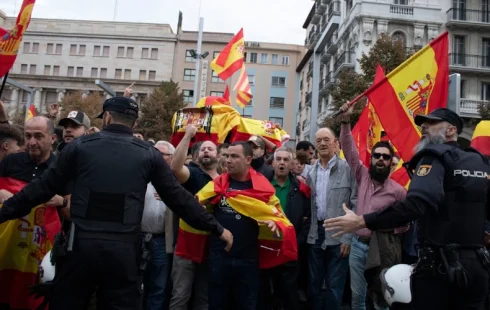
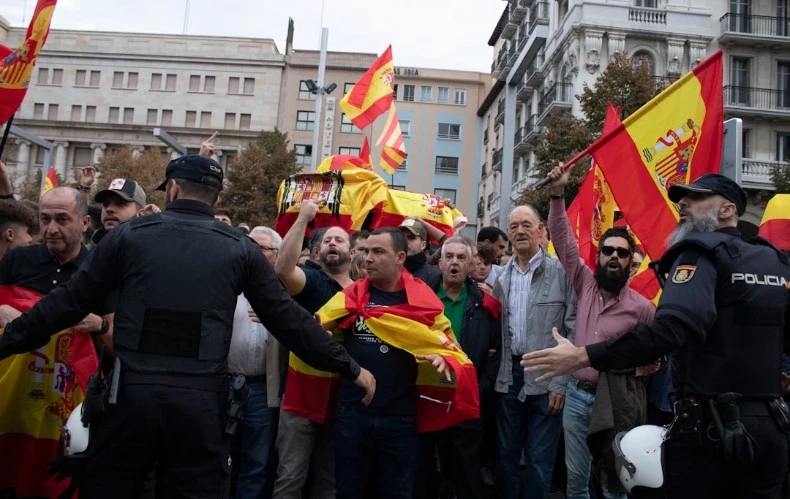
Tens of thousands of people took to the streets across Spain on Saturday to protest against the Spanish government's migration policies, with a particular focus on the North African enclave of Ceuta. The demonstrations occurred more than a month after an unprecedented surge of migrants overwhelmed Ceuta, drawing criticism towards Prime Minister Pedro Sánchez’s administration.
In Madrid, approximately 50,000 people participated in a significant rally, expressing their discontent over the government's handling of the migration crisis. Protesters criticized what they described as a conciliatory approach towards Morocco, which they claimed neglected the Spanish enclave’s needs.
Participants in the demonstrations, including political speakers and activists, accused the central government of failing to provide adequate support for Ceuta. The enclave has been at the heart of Spain's migration challenges after about 8,000 migrants, a significant number of them minors, swam across the border from Morocco in May.
In response to the protest activities, the Spanish National Police intervened in Madrid, where extremist groups had gathered near the Spanish Congress. Police dispersed these groups using tear gas and rubber bullets, according to local reports. The reports also indicated that four individuals, including two minors, were arrested for causing disturbances and resisting law enforcement. Additionally, four police officers were injured during these confrontations.
Similar protests were reported in other Spanish cities, where demonstrators echoed the call for a re-evaluation of Spain’s migrant policies. These rallies, however, were not universally supported, as counter-protests were also organized in some locations, reflecting a divided public opinion over the government’s approach to handling migration and foreign relations, especially with Morocco.
The wave of migrants into Ceuta in May highlighted the strained diplomatic ties between Spain and Morocco, following Spain’s admission of Brahim Ghali, the leader of the Polisario Front, into a Spanish hospital. Moroccan officials were reportedly incensed by this act, seen as support for the Polisario Front, which opposes Moroccan control of the Western Sahara. This geopolitical tension exacerbated sentiments among the Spanish public regarding the autonomous cities of Ceuta and Melilla, stirring nationalistic fervor amid perceived governmental inaction.
The demonstrations draw attention to broader concerns within the Spanish populace about migration management and border security, as well as the handling of diplomatic relations with neighboring countries. These issues continue to challenge Sánchez’s administration amid increasing pressure to address domestic concerns while balancing international obligations.
Amid the protests, Spanish officials have reiterated their commitment to upholding Spain’s territorial integrity and have stressed the importance of continued dialogue with Morocco to prevent future incidents and foster cooperation. Yet, the recurring protests illustrate a discontented national climate, urging for more robust measures to manage migration inflows and protect Spain’s autonomous territories.
The situation in Ceuta and the governmental response are likely to remain under scrutiny as Spain navigates the multifaceted challenges posed by migration and international diplomacy. As the debate over migration policy persists, officials may face continued public demonstrations demanding not only immediate action but also long-term solutions to ensure the safety and sovereignty of Spain’s borders.
Source: tagesschau.de
Section: Politics
Section: Science

Section: News

Section: Business

Section: News

Section: Business

Section: Fashion
Section: News

Section: Arts

Section: News
Both private Health Insurance in Germany and public insurance, is often complicated to navigate, not to mention expensive. As an expat, you are required to navigate this landscape within weeks of arriving, so check our FAQ on PKV. For our guide on resources and access to agents who can give you a competitive quote, try our PKV Calculator.
Germany is famous for its medical expertise and extensive number of hospitals and clinics. See this comprehensive directory of hospitals and clinics across the country, complete with links to their websites, addresses, contact info, and specializations/services.
Didn't manage to get a ticket for Linkin Park? Or still not enough after the concert? Join us at CRASH on June 12th for our "IN THE END" Linkin Park Special + CORE NIGHT.All night long, we'll be playing Linkin Park's music, along with Nu Metal, Metalcore, and Alternative Rock from bands such as Limp...


No comments yet. Be the first to comment!